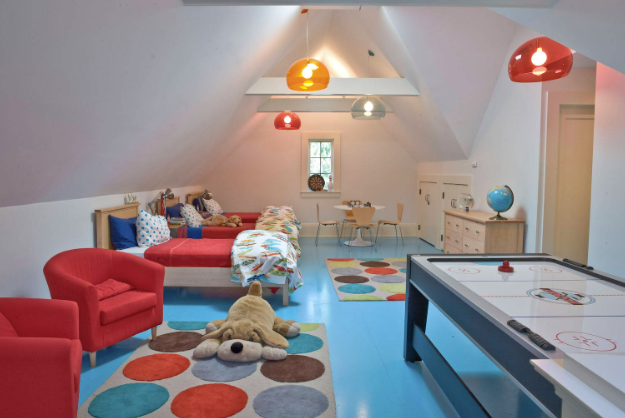

Attic playrooms unfold best when space is divided into clear zones: a quiet reading nook, a creative art and building area, a compact homework retreat, and a safe active corner. Vertical space becomes a design ally with movable screens and layered lighting. Modular storage keeps textures and colors cohesive as walls pitch and shelves rise. Finishes adapt with age, while ergonomic layouts guide furniture toward calm pathways. The next idea awaits, inviting a thoughtful turn toward smarter schematics.
How to Start: Defining Attic Playroom Zones
A well-planned attic playroom begins with clear zones: a reading corner, a creative area for art and building, a quiet retreat for homework, and an active play zone for movement. The approach favors playroom zoning, guiding stakeholders through modular layout choices and color coordination. Attic lighting ideas emerge as subtle, flexible highlights that empower free expression and cohesive flow.
Layout Patterns That Maximize Height and Flow
Looking up at the attic’s pitched lines, designers map layout patterns that maximize height and flow by treating vertical space as an active element rather than a constraint.
Creative vision meets modular approach: color coordination guides scaled zones.
Attic peak utilization shapes bright, flexible paths.
Vertical play zones, efficiency lighting, and moveable partitions forge responsive, freedom-forward playrooms.
Storage and Safety Hacks for Small Attic Spaces
Storage and safety considerations in tight attic spaces hinge on modular systems that blend order with whimsy: compact shelves, labeled bins, and multi-purpose furniture anchor the room while flexible partitions and low-profile safety rails create clear, sail-like pathways along sloped ceilings.
The approach emphasizes storage zoning and routine safety checks, ensuring accessible, liberated play within a disciplined, color-coordinated layout.
Design Finishes and Color Palettes That Energize Play
Design finishes and color palettes for an attic playroom should fuse energy with practicality, translating tall angles and natural light into a cohesive, playful atmosphere. The approach emphasizes modular color coordination, enabling flexible zones and evolving themes. Color psychology informs mood shifts, while furniture ergonomics guide scale and placement, ensuring safe movement. The result is a liberated, vibrant space that grows with the child.
Frequently Asked Questions
How Can I Add Insulation Without a Big Remodel?
A concise approach shows insulation placement can be layered with existing structure, adding removable panels and lightweight battings. Vapor barriers—carefully sealed—block moisture. Creative modular coordination allows color-matched, flexible insulation pockets, empowering freedom without a full-scale remodel.
What Budget-Friendly Lighting Options Work Best?
A hypothetical family dims sunlit attic corners with budget lighting, selecting energy-saving LED attic lamps. They mix warm, cool neutrals in modular fixtures, harmonizing color coordination while preserving freedom to rearrange as needs shift, cost-conscious yet expressive.
Are Tall Ceiling Ideas Effective for Kids’ Safety?
Tall ceiling ideas are effective for kids’ safety, provided ceiling height clearance is maintained and play zones are clearly delineated; this creates freedom to explore while preventing accidental impacts in a creative, color-coordinated, modular space.
How Can I Repurpose Existing Attic Access Points?
They repurpose attic access points by modularly reconfiguring doors, ladders, and hatches, prioritizing safety and flow; creativity constraints inform clever storage nooks and quiet study zones, while access optimization fosters color-coordinated, freedom-loving, adaptable play and creative vision.
See also:IoT Applications in Smart Homes and Buildings
What Legal/Building Codes Affect Attic Playrooms?
Attic code basics govern egress, ceiling height, fire safety, and ventilation; safety compliance tips urge inspections, guardrails, and proper insulation. It reads as a creative vision with modularity, color coordination, and a freedom-loving, compliant approach to space.
Conclusion
In the attic, the idea of limits quietly softens. Zones unfold like gentle stair steps, guiding energy through a bright, adaptable tapestry. Movable dividers become whispering neighbors, tasks drift toward the quiet corner, and playful bursts travel along pitched ceilings with named bins cheering them on. Finishes harmonize, colors shift with growing curiosity, and safety rails nod in approving rhythm. The space breathes as a modular story, evolving with age, inviting imagination to settle and then take flight anew.


 By
By